Showing posts with label differentiated instruction. Show all posts

Monday, June 18, 2012

The Teacher as a Resource

Personalized Learning in the Common Core

By Amy Esselman
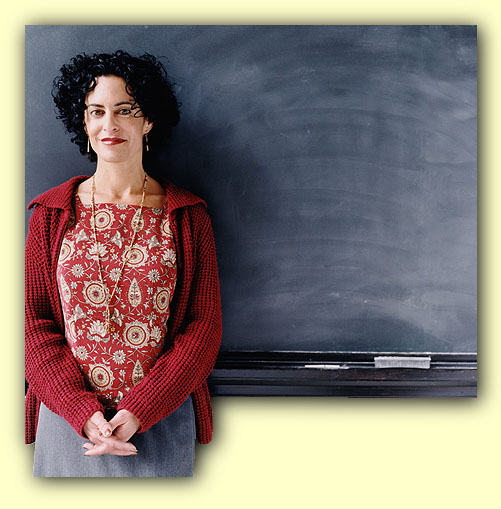
When classrooms have personalized learning, the teacher becomes a resource rather than the sole source of knowledge.
When I think about classrooms--classrooms in which I had been taught years ago or the college classes where I find myself lately, there seems to be a reoccurring pattern:

Desks in a row. White board at the front. Teacher talking.

But, as I’m sure some of you are already aware, classrooms don’t look like this anymore. The old model is out, and we are on to bigger and better things.

When I was in elementary school and then high school, teachers were at the center of any learning. They told the class which lessons we were learning and helped lay the framework for our objectives. Essentially, teachers held the key to classroom. In my mind, it made sense—that’s why they stood at the front of the room, right? But now, the keeper of the keys has changed.

Personalized learning, switching from teacher-centered instruction to student-centered classrooms, is on the rise. With the Common Core Standards finally being implemented into schools, it’s time to imagine what more and more classrooms are starting to look like. The scenery is changing and students and teachers alike like what they see.

The autonomy of the Common Core Standards means that teachers will have a greater flexibility of how to teach and how to help students improve in certain skill areas. The Standards only call for certain skills to be learned, instead of the specifics of how to learn them, and that’s a good thing. Now, with the help of the Standards and the dedication of teachers, education can—finally—be tailored to the unique needs of students. Teachers will become even more of a resource. Instead of standing at the front of the room all the time, the teachers will become mentors, helping steer students in the right direction on their course of learning.

Imagine more small groups, innovative individual projects, increased peer-to-peer conferences, exploratory research with technology and new applications, outside experiments, portfolio construction, blog assignments, enhanced computer usage integrated with lessons, one-on-one instruction—the list goes on. Until now these things have existed, but not altogether, and they were not regularly utilized.

A “special” project was a once in a while occurrence, or a breath of fresh air from regular instruction. These concepts are a reality and they are happening right now in classrooms all over the country. Personalized learning combines the interests and skill levels of individual students and lets them have an active role in how they approach learning objectives. Students will have more time to work with teachers on how to understand concepts that they may have missed in a regular class setting.

More learning can take place when you explore the possibility of trying something new. The kids that weren’t motivated by group learning might flourish. The students who weren’t challenged can create projects and test themselves. I don’t know about you, but that’s something I would have craved in school—the chance to showcase my strengths and think outside the box. I would have given anything to integrate what I loved with what I was learning.

When we give students, and not the teacher, the key to achievement and success, the stakes change. Classrooms will never look the same, but maybe that’s a good thing.

Thursday, June 14, 2012

Let’s Get Personal: Teaching Away from the Middle

Personalized Teaching in the Common Core

By Amy Esselman

When teachers focus on the average, students at either end of the spectrum are left out.

In school, I dreaded being the last to finish or “the one who didn’t understand.” It was risky raising your hand, because you weren’t sure if you’d be ridiculed for asking questions, or would possibly hold up the class. And yet I was afraid to stay silent if I didn’t understand something, just in case I got left to figure it out on my own.

Times may have changed, but I bet the same insecurities continue to exist for students. How many times do you think students in either the top of the class, or those on the lower end, feel neglected as a result of the teaching style? Too often teaching is viewed as a “one size fits all” operation. But, whether we like it or not, it’s far from the truth.

Gone are the days when you can teach one lesson, one way, and expect every student to catch on.

Of course teachers know that they need to differentiate education. A select few do it with aplomb, most of us are up to our eyes in everything else, and on the other end of the spectrum are the frustrated teachers who can do nothing more than throw their hands in the air. It’s a problem. But it is a problem with a solution.

The Common Core State Standards help to address part of the problem—you may have seen that line coming, but what you don’t know is how much the Common Core can actually help a teacher. The Standards help teachers focus on necessary skills that students should develop, rather than dictating exactly “how” students should learn them. As the Common Core Standards begin a more widely spread implementation phase, personalized learning has moved to the forefront of many classroom agendas.

The Standards will integrate perfectly with the idea of personalized instruction. Sure, it’s easy to teach to the middle of the class, focus on what the “typical” student should understand. But, this presents a problem. It’s just not the reality. Some students are bored and unchallenged waiting for others to catch up. Then, there are the students struggling to keep their heads above water. Something has to give, and overtime, with the implementation of the Common Core, I think it will.

Teachers will work on ways to customize and hone in on individual student needs. Students who don’t feel challenged can work with their teacher to set different goals and vary their lessons. Students at the bottom of the class will be able to seek guidance and one-on-one time to improve. Teachers are spending time figuring out what works and what doesn’t when it comes to their students. But, is that enough?

Let’s get as far away from teaching to the middle as we can. If teaching styles and instruction become more aligned with the individual needs and interests of each student, we will see a shift in all areas of the classroom. Students will feel engaged and productive at every level and will work to improve at their own pace.

Sunday, April 22, 2012

How I Found Student Achievement Best Practices

 By Anya Leavy, Pre-kindergarten Teacher

Student achievement best practices include differentiating instruction, focusing on multiple intelligences, and narrowing the gap between home and school.
I’ll admit it. I'm a rookie. After 12 years of teaching on the Kindergarten and Pre-Kindergarten grade level, I still feel that way. On a daily basis, I am learning and researching ways to improve my approach, delivery, and ultimately, help my students to the next level of their educational career--in other words, I'm always on the lookout for student achievement best practices. And somewhere along the way, I've narrowed down some "tried and true" best practices that have helped me on my teaching journey to becoming a Master Teacher.  They are differentiating instruction, focusing on the multiple intelligences, and narrowing the gap between home and school.

Differentiating Instruction


Differentiating instruction is not a new concept. Great teachers have always known how to meet students where they are to increase their achievement level. However, this approach to a new lesson is important because the school population has become more transient in recent years. It is important to assess students where they are and then mold lessons to meet the students' needs. I've learned that a lesson that is "personalized" for each student increases the amount of information retained, as well as boost active participation.

Focusing on Multiple Intelligences


Howard Gardner’s description of the multiple intelligences is almost aligned with using the differentiated instruction approach.  Using one or more of the multiple intelligences, on a daily basis, appeals to each child, thereby meeting the student where they are academically and socially.  Each child in my classroom has an intelligence that is more predominant than the other intelligences. Joslyn is kinetically inclined, so I teach her the alphabet through an Alphabet Flashcard Relay Race.

Another child, Carlton, is a logic-mathematical learner, so as he’s building a tower, we’re counting the number of blocks using one-to-one correspondence, as well as measuring the length and width of his building. I also have a child, LaToya, who has a strong interpersonal intelligence. To extend the story of the Three Little Pigs, I have her be the director of what would happen next in the story, using her classmates as actors. All of these are examples that appeal to that child’s multiple intelligence, so that it becomes a memorable educational experience that they can place in their “prior knowledge suitcase” and reference it when they “travel” to the next grade level.

Narrowing the Gap


The most important practice that I have always used to increase student achievement is creating a partnership between the child, the person(s) at home with that child, and me. I am a firm believer that if the child, and their family, knows that you want them to succeed, the educational options are limitless. Parents and the child’s family entrust their child’s education to a teacher hoping that their child will excel beyond their initial goals. In this day and age, where the child may not have a traditional family structure composing of a Mom and Dad, it is imperative that you reach out to all caregivers of that child. My motto is the more on the “team”, the better. The more family members that are vested in their child’s education displays to that child that there is a special “cheering section” especially for them.

Children tend to do better educationally and socially if they know that are positively supported. It also helps the family stay abreast of the goals for that particular grade level. This provides possible opportunities for lessons at home that relate to the goals that you plan to reach this year for that child in school.  Having an open door policy in the classroom, for a child to see their parent, aunt, or big cousin smile at them while they are on task, goes a long way. Asking for family support on a special project or having a family member volunteer, to participate in a daily activity, helps the family, child, and teacher strengthen the sense of team. In the end, the team formed will help that child excel academically and socially.

And the Moral of the Story Is...


A teacher who had been teaching 30 plus years told me once that as a teacher “you are constantly evolving; there is never a point where you feel like you have arrived.” This coming from a teacher, that I had observed, that had her classroom running like a well-oiled machine, still continued to research ways to increase student achievement.  As teachers, we want nothing more than to have our student’s achieve and reach educational heights beyond our aspirations. I still have far to go on my educational journey, but I know that the above practices/approaches are ones that I will continue to carry in my “suitcase” from year to year. I hope that I’ve added a little to your “teacher suitcase” while we travel on the road of teaching.